
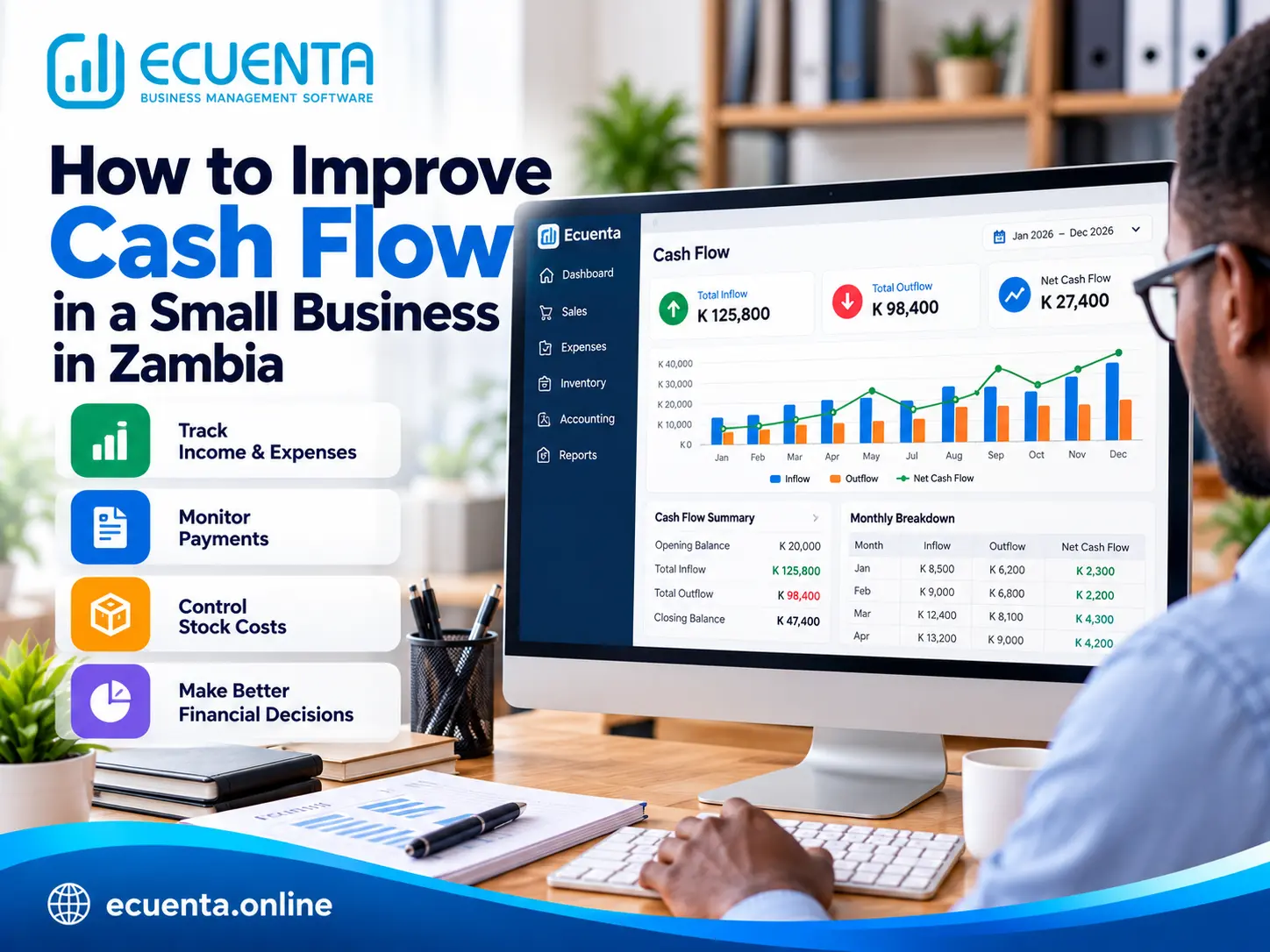
How to Improve Cash Flow in a Small Business in Zambia
Running a small business in Zambia requires careful financial planning. You may have regular customers, good sales, and growing demand for your products or services. However, you may still struggle to pay suppliers, salaries, rent, and other business expenses if money doesn't come in on time. This is where cash flow management becomes important.
Cash flow is the movement of money into and out of your business. Money received from customers is an inflow, while payments for stock, salaries, rent and other costs are outflows.
A business can make a profit on paper and still experience cash shortages. For example, a customer may buy goods on credit but take several weeks to pay. During that time, the business may need to pay its suppliers and employees.
The good news is that better planning and simple financial practices can help you improve your business's cash flow. This guide explains practical steps that Zambian business owners can start using today.
1. Understand Where Your Money Goes
The first step towards better cash flow is understanding how money moves through your business.
Many small businesses record sales but do not review their expenses regularly. As a result, they may not know how much money is available after paying their bills.
Start by recording all money received and paid out. Include sales, customer payments, supplier bills, transport, rent, salaries, utilities, and other operating costs.
Review these records every week. Look for expenses that are increasing or payments that could be planned better.
For example, a retail shop in Lusaka may record strong sales but spend too much on emergency stock purchases and transport. Reviewing these costs can help the owner identify where money is being used unnecessarily.
Using a clear record-keeping process or accounting software for small businesses can help you organise transactions and understand your financial position.
2. Collect Payments from Customers on Time
Late customer payments are a common reason businesses experience cash shortages.
If you supply goods or services on credit, set clear payment terms before completing the transaction. Explain when payment is due and follow up politely when an invoice becomes overdue.
You can improve collections by:
- Sending invoices promptly.
- Stating clear payment deadlines.
- Keeping accurate records of unpaid invoices.
- Following up before and after the due date.
- Reviewing credit arrangements for customers who pay late.
For example, a supplier may deliver goods worth K15,000 to a customer who agrees to pay within 30 days. If the payment is delayed, the supplier may struggle to purchase the next batch of stock. Regular follow-ups can help reduce these delays.
Where suitable, offer convenient payment options such as bank transfers, cards, or supported mobile money services. The easier it is for customers to pay, the simpler it may be to collect money.
3. Plan Your Business Expenses
Every business has essential expenses, but poor planning can put pressure on available cash.
Prepare a list of regular payments, including rent, salaries, supplier bills, utilities, and loan repayments. Record their due dates so you can plan.
Separate essential expenses from costs that can be reduced or postponed without harming the business.
For example, a shop may be spending money on products that sell slowly while running short of cash to purchase popular items. Reviewing spending patterns can help the owner make better purchasing decisions.
However, cutting costs should not affect product quality, customer service, or important business operations. The goal is to control unnecessary spending while protecting the activities that generate income.
4. Manage Stock Carefully
For retailers, wholesalers, and distributors, stock can tie up a large amount of money.
Buying too much stock may leave insufficient cash for salaries, transport, and other expenses. Buying too little can lead to missed sales when customers want unavailable products.
Review which products sell quickly and which remain in storage for long periods. Use sales history to guide purchasing decisions. You should also check stock levels regularly and investigate damaged, missing, or expired items.
For example, a shop in Ndola may discover that some products sell every week while others remain unsold for months. Adjusting future orders can help release money that would otherwise remain tied up in slow-moving stock.
A structured stock control process, supported by suitable inventory management software, can help businesses monitor stock movement and make more informed purchasing decisions.
5. Prepare a Cash Flow Forecast
A cash flow forecast estimates how much money your business expects to receive and spend over a future period. It helps you identify possible shortages before they happen.
Start with the cash available today. Add the payments you expect to receive, then subtract the expenses you expect to pay.
For example:
| Cash flow item | Amount |
|---|---|
| Opening cash balance | K20,000 |
| Expected customer payments | K15,000 |
| Expected expenses | K22,000 |
| Expected closing cash balance | K13,000 |
In this example, the business expects to have K13,000 remaining after the listed transactions, assuming all expected payments arrive and expenses remain as planned.
Prepare a forecast weekly or monthly, depending on your business. Update it when customer payments are delayed or unexpected expenses arise. A forecast is not a guarantee, but it helps you prepare for different situations.
6. Make It Easier for Customers to Pay
Customers may prefer different ways of paying. Some use mobile money, while others prefer bank transfers or cards. Offering suitable payment options can reduce delays and make transactions more convenient.
Businesses should choose payment services that fit their customers, costs, and operating needs. They should also confirm when payments will be settled and how transaction fees are charged.
For businesses looking to connect payments with financial records, Ecuenta's digital payment integration provides information about its integration with Lenco. Connected payment and accounting workflows can help reduce manual recording, depending on the configuration used.
Always confirm that a payment has been received before treating an invoice as settled.
7. Keep Business and Personal Money Separate
Using the same account for personal and business spending can make it difficult to understand how the business is performing.
For example, an owner may use money from daily sales to pay personal bills without recording the transaction. The business records then become less accurate, and the available cash may be lower than expected.
Where practical, use separate accounts or clearly separated records for business and personal transactions. Record money taken from the business by the owner and any money introduced into the business.
This makes it easier to review expenses, understand available funds, and prepare accurate financial reports.
8. Build an Emergency Cash Reserve
Unexpected expenses can affect any business. Equipment may need repairs, a supplier may increase prices, or customer payments may arrive later than expected.
An emergency cash reserve can help your business handle these situations without relying entirely on borrowing.
Start with a realistic savings target. Set aside a manageable amount when cash flow allows, and gradually build the reserve. The amount you need will depend on your monthly expenses, business risks, and income patterns.
Avoid using the reserve for routine spending unless necessary. Review it regularly and replenish it when business conditions improve.
How Ecuenta Can Help You Monitor Business Finances
Improving cash flow begins with accurate records and regular financial reviews.
Ecuenta accounting software helps businesses organise financial transactions and review their financial information. Depending on the features and configuration used, businesses can record income and expenses, manage invoices and payments, and review relevant financial reports.
These records can help business owners identify unpaid customer invoices, understand spending patterns, and prepare more informed cash flow forecasts.
Software alone cannot guarantee positive cash flow. Businesses still need to collect payments on time, control expenses, and plan purchases carefully. The value comes from combining accurate records with regular financial decisions.
Frequently Asked Questions
Cash flow helps a business pay its daily expenses, purchase stock, meet salary commitments, and manage supplier payments. Good cash flow planning also helps owners prepare for unexpected costs.
Yes. A business may record sales and make a profit but still lack available cash when customers pay late, or expenses become due before money is received.
Weekly reviews are useful for businesses with frequent transactions or changing cash needs. Monthly reviews can help with longer-term planning. The right frequency depends on the nature of your business.
Accounting software can help organise invoices, payments, expenses, and financial reports. It supports better decisions, but the results depend on accurate records and good financial management.
Conclusion
Improving cash flow does not always require a major change to your business. Small steps, such as collecting customer payments on time, controlling expenses, managing stock, and preparing a cash flow forecast, can make a meaningful difference.
Start by reviewing your current financial records and identifying the biggest cause of cash shortages. Then introduce practical changes and monitor the results regularly.
With better planning and reliable financial information, your business can become more prepared for daily expenses and future growth. Explore Ecuenta accounting software for Zambian businesses to learn how organised financial records can support your cash flow management.