
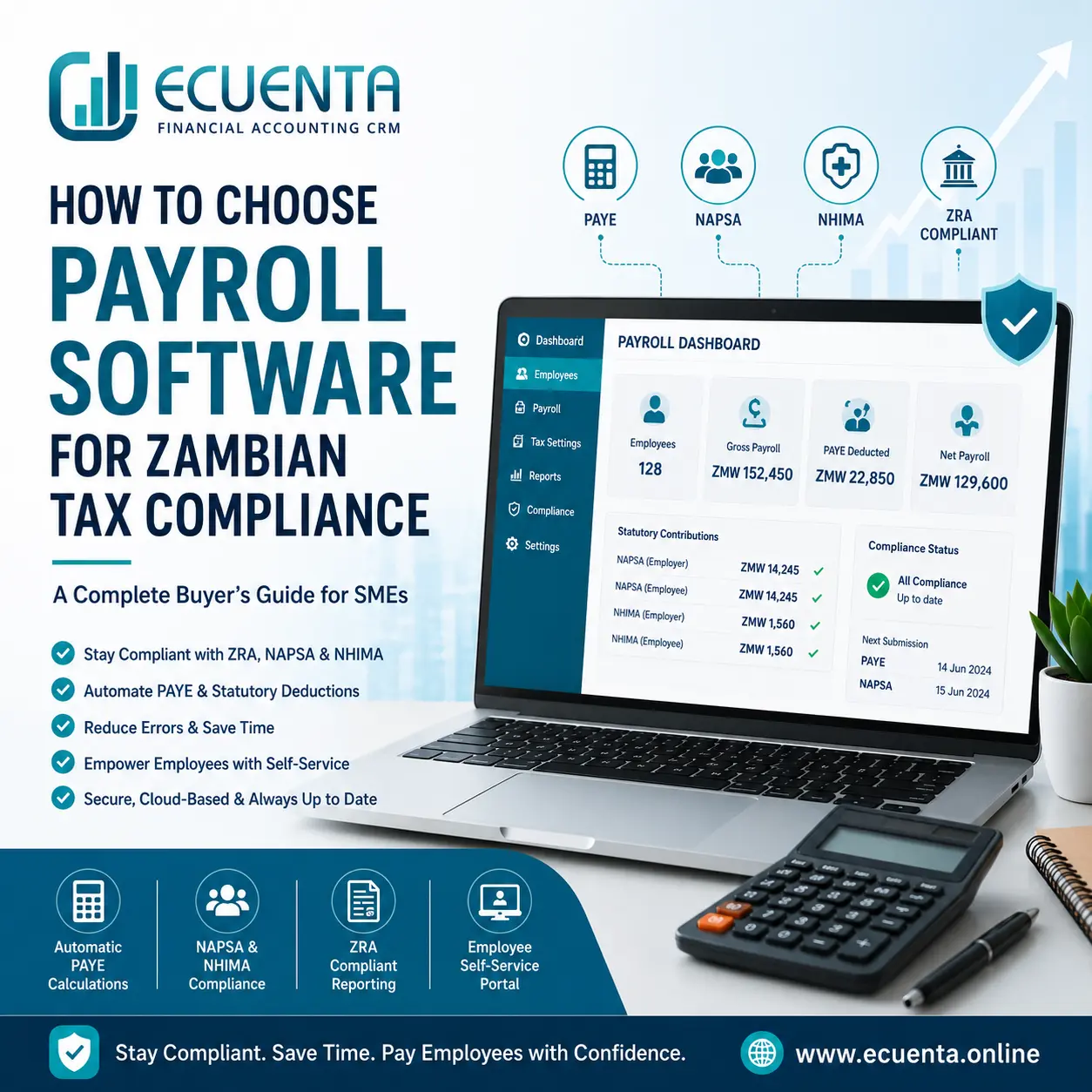
How to Choose Payroll Software for Zambian Tax Compliance: A Complete Buyer's Guide for SMEs
Managing payroll is one of the most important responsibilities for any business in Zambia. Whether you run a small enterprise, a growing company, or a large organization, payroll accuracy directly affects employee satisfaction, tax compliance, and financial management.
Unfortunately, many businesses still rely on spreadsheets or generic payroll systems that are not designed for Zambian regulations. This can lead to incorrect PAYE calculations, late statutory submissions, compliance penalties, and unnecessary administrative work.
Choosing the right payroll software can help your business automate calculations, stay compliant with government requirements, and save valuable time every month. In this guide, we'll explain the key features you should look for when selecting payroll software that complies with Zambian tax laws.
Why Payroll Compliance Matters in Zambia
Zambian employers must comply with several statutory requirements when processing employee salaries. Payroll software should accurately calculate and manage:
- PAYE (Pay As You Earn)
- NAPSA contributions
- NHIMA contributions
- Employee deductions
- Employer contributions
- Tax reporting requirements
- Compliance documentation
Failure to comply with these regulations can result in penalties, audits, and unnecessary financial risks. That's why choosing payroll software specifically designed for Zambia is essential.
1. Automatic PAYE Calculations
The first feature to look for is accurate PAYE calculation.
Tax regulations change periodically, and manually updating tax brackets can be time-consuming and risky. Your payroll software should automatically calculate:
- Monthly PAYE deductions
- Taxable income
- Allowances and benefits
- Statutory deductions
- Net salary
A Zambia-compliant payroll system should always reflect the latest tax rules to ensure employees are taxed correctly and employers remain compliant.
Why It Matters
Incorrect PAYE calculations can lead to:
- Overpayment of taxes
- Underpayment penalties
- Employee disputes
- Compliance issues with tax authorities
2. Built-In NAPSA Contribution Management
The National Pension Scheme Authority (NAPSA) requires employers to make pension contributions on behalf of employees.
A good payroll solution should automatically:
- Calculate employee contributions
- Calculate employer contributions
- Generate NAPSA reports
- Track contribution history
- Maintain compliance records
Manual calculations increase the likelihood of errors, especially as employee numbers grow.
What to Look For
Choose payroll software that updates contribution calculations automatically and generates reports ready for submission.
3. NHIMA Compliance Features
The National Health Insurance Management Authority (NHIMA) requires employers to deduct and remit contributions correctly.
Your payroll software should:
- Automatically calculate NHIMA deductions
- Apply current contribution rates
- Generate compliance reports
- Maintain historical records
Many generic payroll systems do not include NHIMA functionality, forcing businesses to rely on manual calculations.
Select software that includes NHIMA support as a built-in feature rather than requiring external tools or spreadsheets.
4. ZRA Compliance and Reporting
One of the most critical factors when choosing payroll software is compliance with Zambia Revenue Authority (ZRA) requirements.
The software should help businesses:
- Maintain tax-compliant payroll records
- Generate payroll reports
- Track tax deductions
- Produce documentation required during audits
- Prepare statutory submissions efficiently
Payroll software that integrates compliance features directly into the platform significantly reduces administrative work.
Questions to Ask Vendors
Before purchasing payroll software, ask:
- Is the software designed specifically for Zambia?
- Does it support ZRA compliance requirements?
- How frequently are tax updates applied?
- Are compliance reports generated automatically?
5. Employee Self-Service Portal
Modern payroll systems should do more than calculate salaries.
Employee self-service features allow staff members to access important payroll information without contacting HR every time they need documentation.
Useful self-service capabilities include:
- Download payslips
- View salary history
- Access tax documents
- Update personal information
- Track leave balances
Benefits
Employee self-service portals help businesses:
- Reduce HR workload
- Improve employee experience
- Increase transparency
- Minimize administrative requests
6. Cloud-Based Accessibility and Security
Today's businesses need flexibility. Cloud-based payroll software enables employers and accountants to access payroll data from anywhere.
Look for software that offers:
- Secure cloud storage
- Automatic backups
- Multi-user access
- Role-based permissions
- Data encryption
Why Cloud Payroll Is Better
Cloud systems eliminate many problems associated with desktop software, including:
- Data loss
- Installation issues
- Limited accessibility
- Manual backups
A secure cloud platform ensures payroll information remains protected while being accessible whenever needed.
7. Local Support and Regular Regulatory Updates
Payroll compliance requirements change over time. Your software provider should actively monitor regulatory updates and ensure the system remains compliant.
When evaluating payroll software vendors, consider:
- Local support availability
- Training resources
- Regulatory update process
- Customer service responsiveness
Choosing a provider with local expertise can save your business significant time and compliance headaches.
Why Ecuenta Is a Strong Choice for Zambian Businesses
When evaluating payroll software for Zambia, businesses should prioritize solutions designed specifically for local regulations.
Ecuenta's payroll module is built to support Zambian businesses with features such as:
- Automated PAYE calculations
- NAPSA contribution management
- NHIMA compliance support
- ZRA-compliant payroll processes
- Employee self-service functionality
- Cloud-based access
- Integrated business management capabilities
Unlike generic international payroll systems, Ecuenta is designed with Zambian regulatory requirements in mind, reducing the need for third-party tax plugins or manual compliance work.
Final Thoughts
Selecting payroll software is not just about paying employees on time. It is about ensuring compliance, reducing risk, improving efficiency, and supporting business growth.
Before making a decision, evaluate whether the software offers:
- Accurate PAYE calculations
- NAPSA contribution management
- NHIMA compliance support
- ZRA-ready reporting
- Employee self-service features
- Cloud accessibility
- Local support and updates
Investing in Zambia-compliant payroll software today can save your business time, money, and compliance challenges in the future.
Frequently Asked Questions (FAQ)
What is the best payroll software for Zambia?
The best payroll software is one that supports PAYE, NAPSA, NHIMA, and ZRA compliance while providing accurate calculations and reporting. Solutions such as Ecuenta are designed specifically for Zambian businesses.
Why is NAPSA compliance important in payroll software?
NAPSA compliance ensures pension contributions are calculated accurately and submitted according to legal requirements, helping businesses avoid penalties.
Does payroll software calculate PAYE automatically?
Yes. Modern payroll software automatically calculates PAYE based on current tax regulations and employee earnings.
What is NHIMA in Zambia?
NHIMA is the National Health Insurance Management Authority responsible for administering health insurance contributions. Payroll software should automatically calculate and track these deductions.
Is cloud-based payroll software secure?
Yes. Reputable cloud payroll providers use encryption, secure backups, and access controls to protect sensitive payroll information.
Can small businesses benefit from payroll software?
Absolutely. Payroll software reduces manual work, improves compliance, minimizes errors, and saves time for small and medium-sized businesses.
Get In Touch